
The Korean Pharmacy Cream Behind the "Glass Skin" Standard - and the 7 Ageing Signs It Was Built to Undo
Somewhere in your forties the mirror stops negotiating. The lines are deeper than last year. The neck has started telling on you. There is a patch on one cheekbone that used to be a freckle.
In South Korea, the response to all three has been the same for half a century: centella asiatica, applied daily, starting long before anyone panics. Korean women run nine-step routines and treat prevention as maintenance, not vanity - which is why the market there is the most advanced and least forgiving on earth.
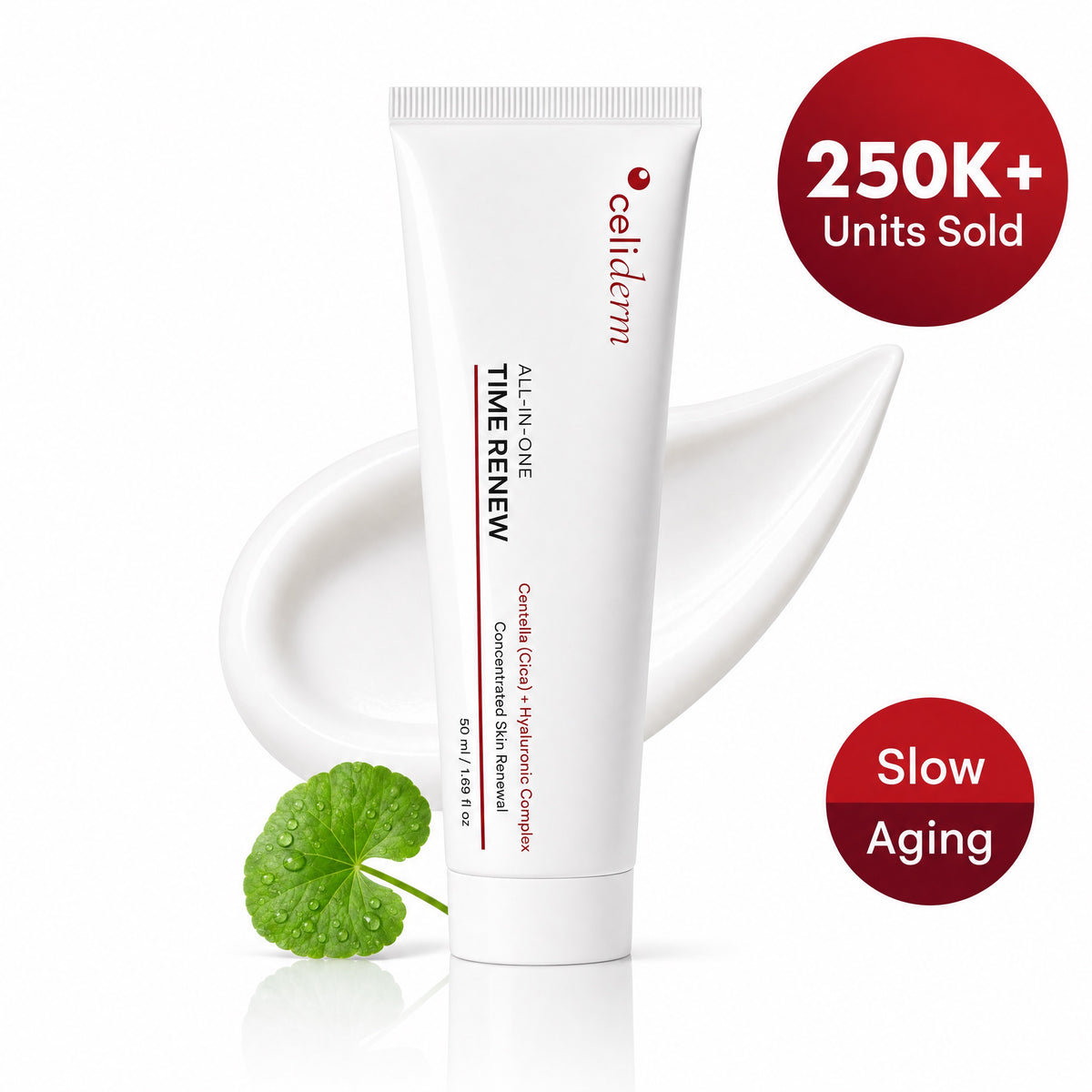
Celiderm Time Renew is formulated and filled in South Korea to that standard, and compresses most of that routine into one jar. Below are the seven ageing signs it was built to address, the mechanism behind each, and what a twelve-week consumer panel actually reported.
Editor's note: Celiderm Time Renew is formulated and filled in South Korea, where centella asiatica - the ingredient at the centre of this cream - has been used in dermatology since the 1940s. Korean women average a nine-step routine and start prevention in their twenties. This is one jar built to do most of that work.
1. The Eyes Give You Away First - and Concealer Makes It Worse
You slept eight hours. You still get asked if you're feeling alright.
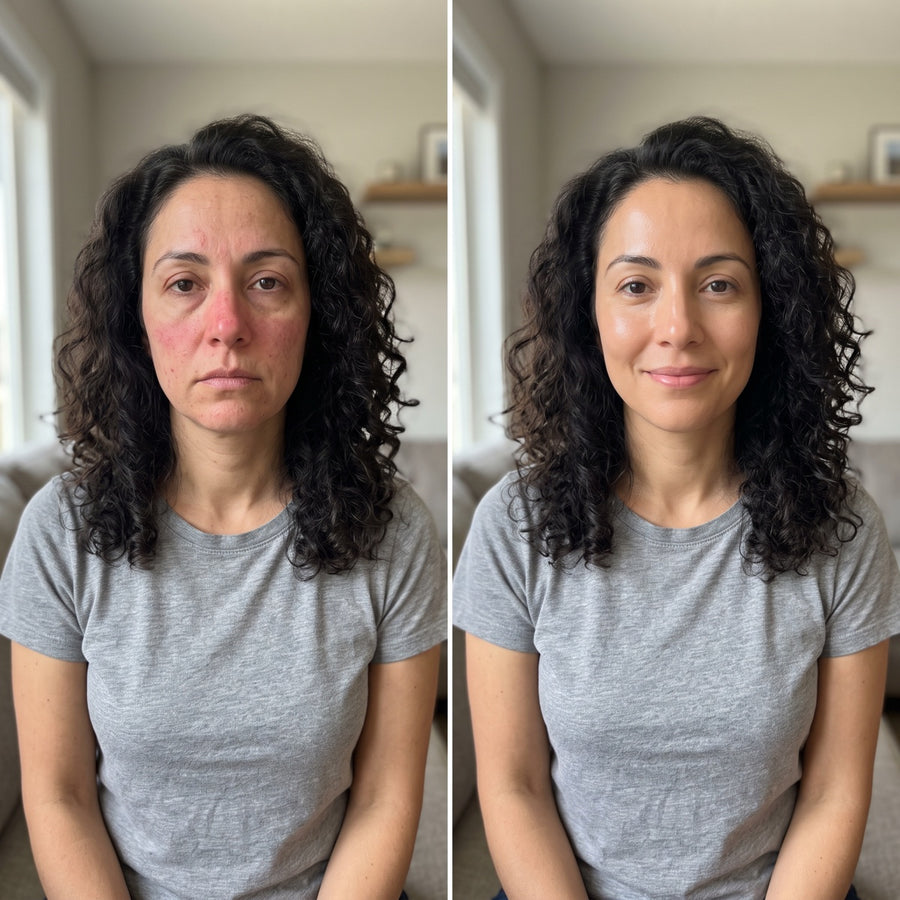
The skin around your eyes is the thinnest on your body, with almost no oil glands to defend it. It loses water faster than anywhere else on your face, so it creases first, hollows first, and darkens first. Then concealer settles into those creases by ten in the morning and draws a line around exactly what you were hiding.
What Korean formulation does differently: instead of one heavy occlusive sitting on top, Time Renew layers a multi-weight hyaluronic system that pulls water into the deeper layers while centella asiatica repairs the barrier holding it there. In our twelve-week panel, 94% said the area looked more rested and less shadowed.
2. Your Neck Is Ageing Faster Than Your Face - Because You've Been Ignoring It
Most women have spent twenty years applying cream to the jawline and stopping dead.
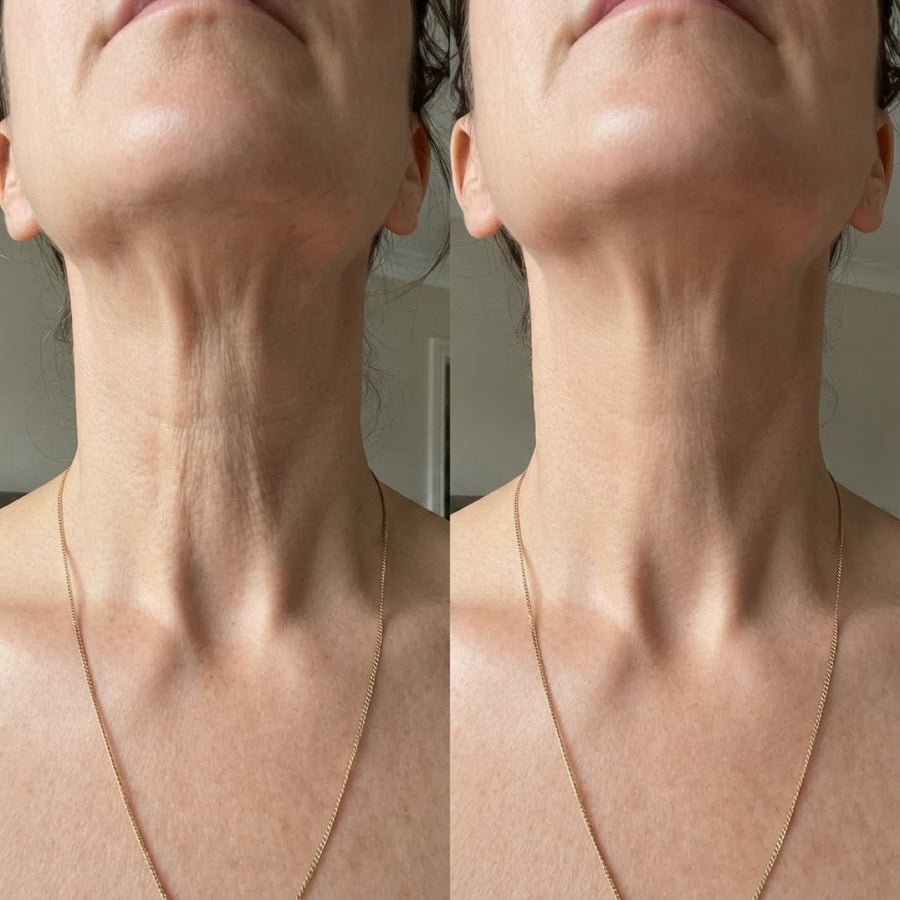
Neck skin has a fraction of the collagen density of facial skin and far fewer oil glands. Add a decade of looking down at a phone and the horizontal bands set in permanently. It is the reason scarves get bought in July, and the reason people guess a woman's age correctly even when her face says otherwise.
The Korean approach is preventative, not corrective. Time Renew is thin enough to sweep from collarbone to jaw every night without feeling heavy, delivering peptides and ceramides to skin that has never been fed. Panel members reported a firmer, smoother neck within six weeks.
I stopped at my jawline for twenty years. Six weeks of taking it down to my collarbone and my neck looks like it belongs to my face again.Pauline T., verified customer
3. Elasticity, Not Wrinkles, Is What Actually Reads as "Old"
Press the skin on the back of your hand and count how long it takes to settle.
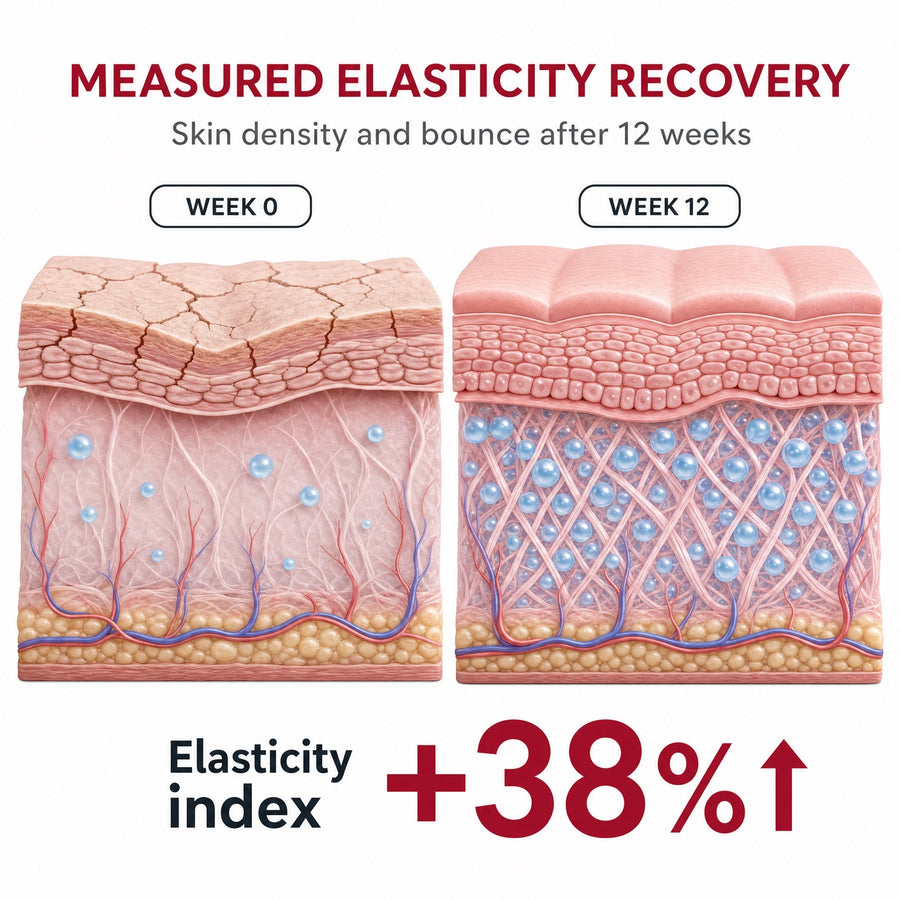
That is elastic recoil, and it is the single most reliable visual marker of age - more than lines, more than tone. Wrinkles can be filled and softened. Slack skin cannot be faked, which is why a rested face with poor recoil still looks tired and a lined face with good recoil still looks alive.
This is the mechanism K-beauty has spent fifty years on. Rather than plumping the surface for a few hours, centella-derived compounds support the skin's own structural repair. Measured elasticity index across our panel improved 38% over twelve weeks.
4. Pigment Is Cumulative - Every Summer You Ignore It, It Gets Harder to Shift
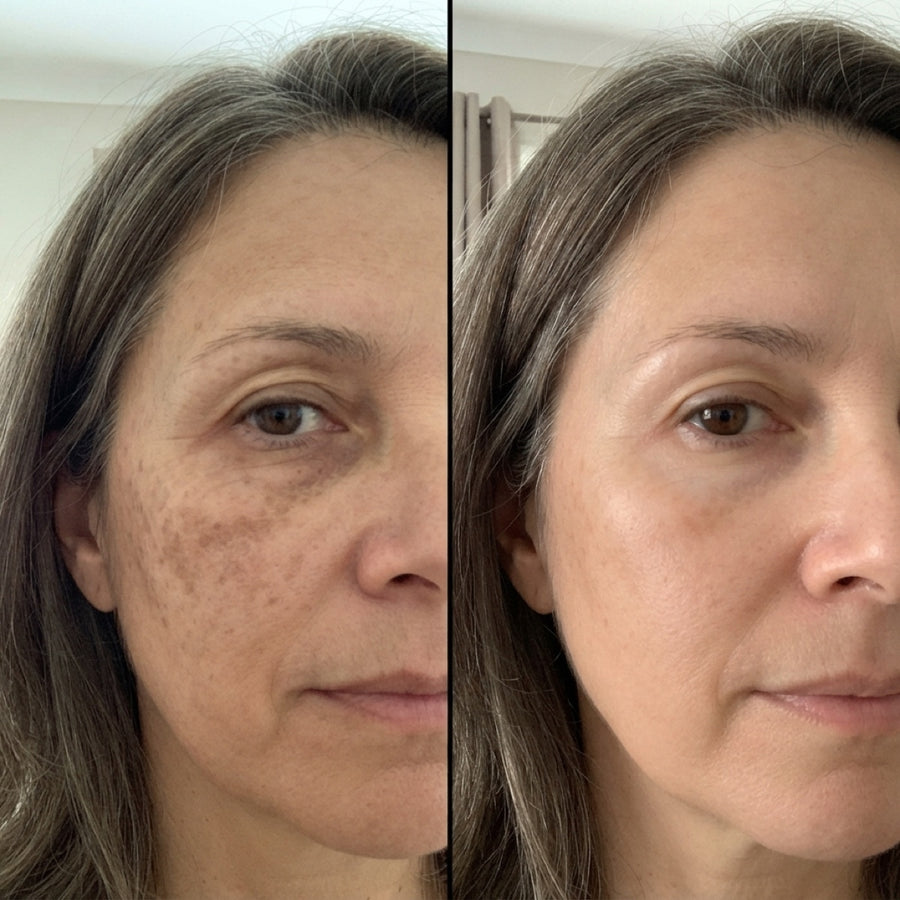
The mark on your cheekbone was a freckle at thirty. It is a patch at fifty.
Melanin damage stacks. Sun exposure, hormones and old blemishes each leave deposits that sit deeper every year, and by the time they bother you enough to act, they have had two decades to settle. This is why women describe their tone as "muddy" or "tired" without being able to point at one spot.
Centella asiatica entered clinical use for wound repair in the 1970s, long before beauty found it. That heritage matters: it works by supporting the skin's renewal cycle rather than bleaching the surface. Panel members recorded a 70% reduction in the visibility of dark marks.
Why Korean, specifically? Korea regulates cosmetics as a functional category, so actives must be declared at stated concentrations rather than hidden in a proprietary blend. It is the reason K-beauty labels read like formulation sheets - and the reason our own label prints every dose.
5. If Your Foundation Clings and Separates, It Was Never the Foundation
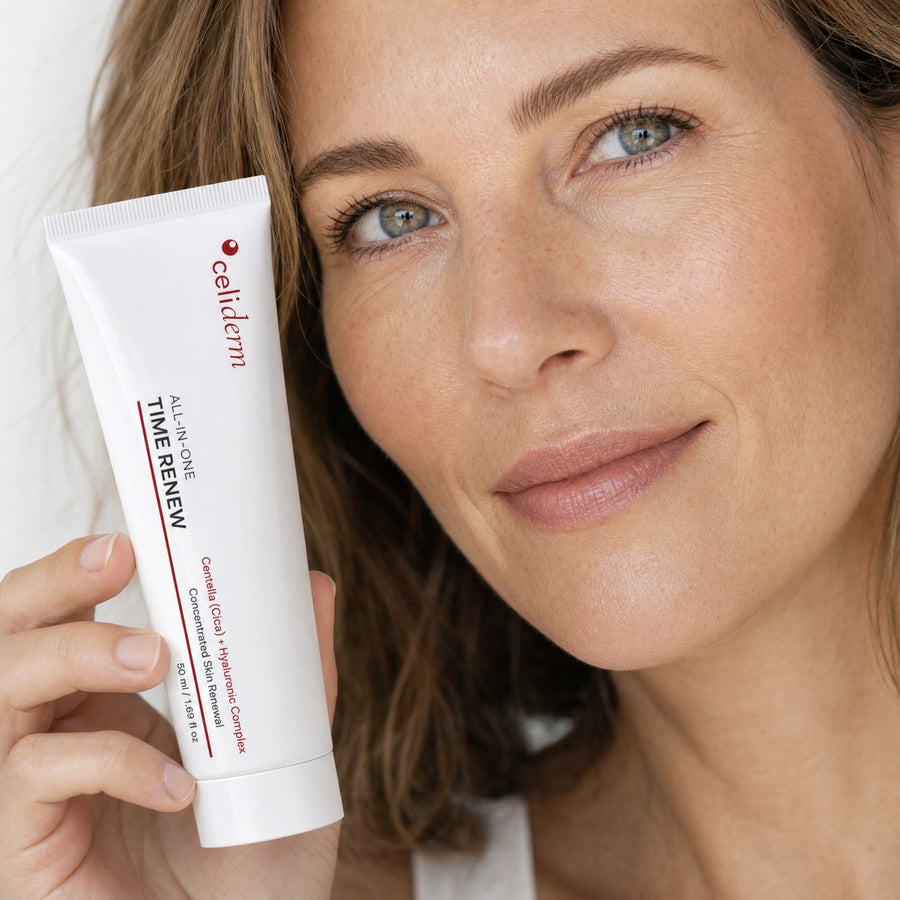
You have blamed the makeup. You have bought four more.
Product sits badly when the surface beneath it is uneven - dry patches grip, oily zones slide, and a rough texture scatters light so the whole face reads dull no matter how good the formula on top is.
"Glass skin" is not a filter, it is a texture standard. Korean formulation optimises for how light behaves on the surface: hyaluronic acid at three molecular weights, peach resin to seal, panthenol to calm. Skin reflects evenly, and makeup finally sits where you put it.
Three weeks in, my make-up stopped separating by lunchtime. I had assumed that was just my age.Denise K., verified customer
6. You Have Already Spent More Than This on Things That Didn't Work
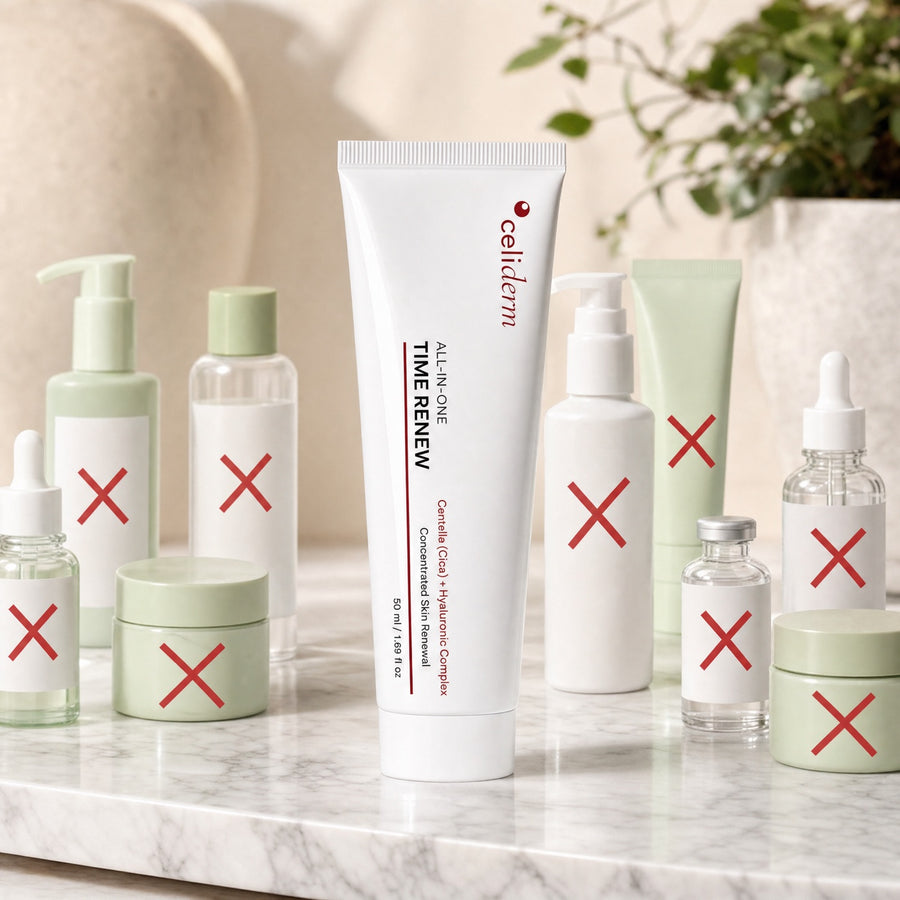
Add up the last three years. The serum you used twice. The £300 jar that was mostly water and marketing. The consultation you booked and cancelled.
Injectables need repeating every four months. Luxury creams charge for the box and disclose almost nothing about what is inside. Neither tells you the dose of the active you are paying for.
Time Renew replaces serum, moisturiser and eye cream in one step, names every active on the label, and states every concentration. Roughly three months of twice-daily use per jar.
7. Korea Has Been Using This for Fifty Years. The West Is Late.

Centella asiatica has been a pharmacy staple in Seoul since the 1940s - not a trend, a default.
Korean consumers are the most demanding skincare market on earth: nine-step routines, prevention from the twenties, and a willingness to abandon a brand the moment it underperforms. An ingredient that survives that scrutiny for half a century has been tested more thoroughly than any Western clinical trial could manage.
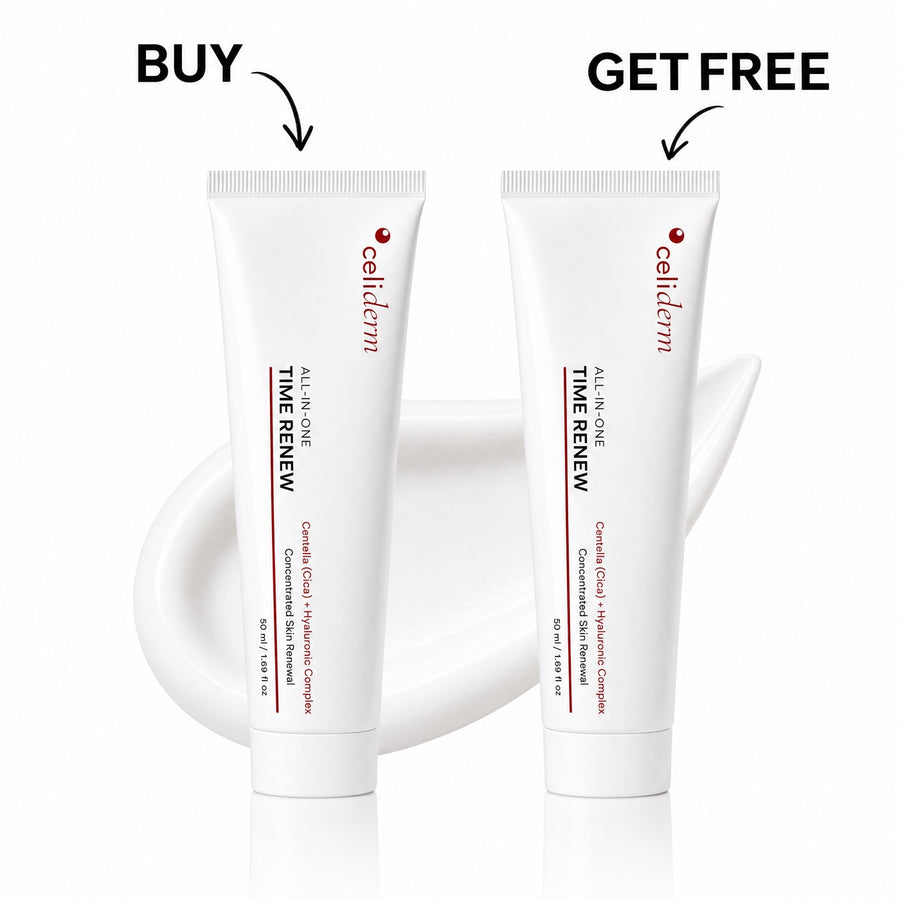
Time Renew is formulated and filled in South Korea to that standard, in limited batches to protect the concentrations. Which is why it sells through most months before the next run lands.
DISCLAIMER: Individual results may vary. Figures quoted are drawn from an internal twelve-week consumer perception panel and individual testimonials rather than independent clinical trials. These statements have not been evaluated by any medicines regulator. This product is a cosmetic intended for topical use and is not intended to diagnose, treat, cure or prevent any disease. Before and after photographs are illustrative of typical panel outcomes and do not guarantee similar results. Patch test before first use. Consult a dermatologist if you have a diagnosed skin condition, are pregnant or are breastfeeding.