
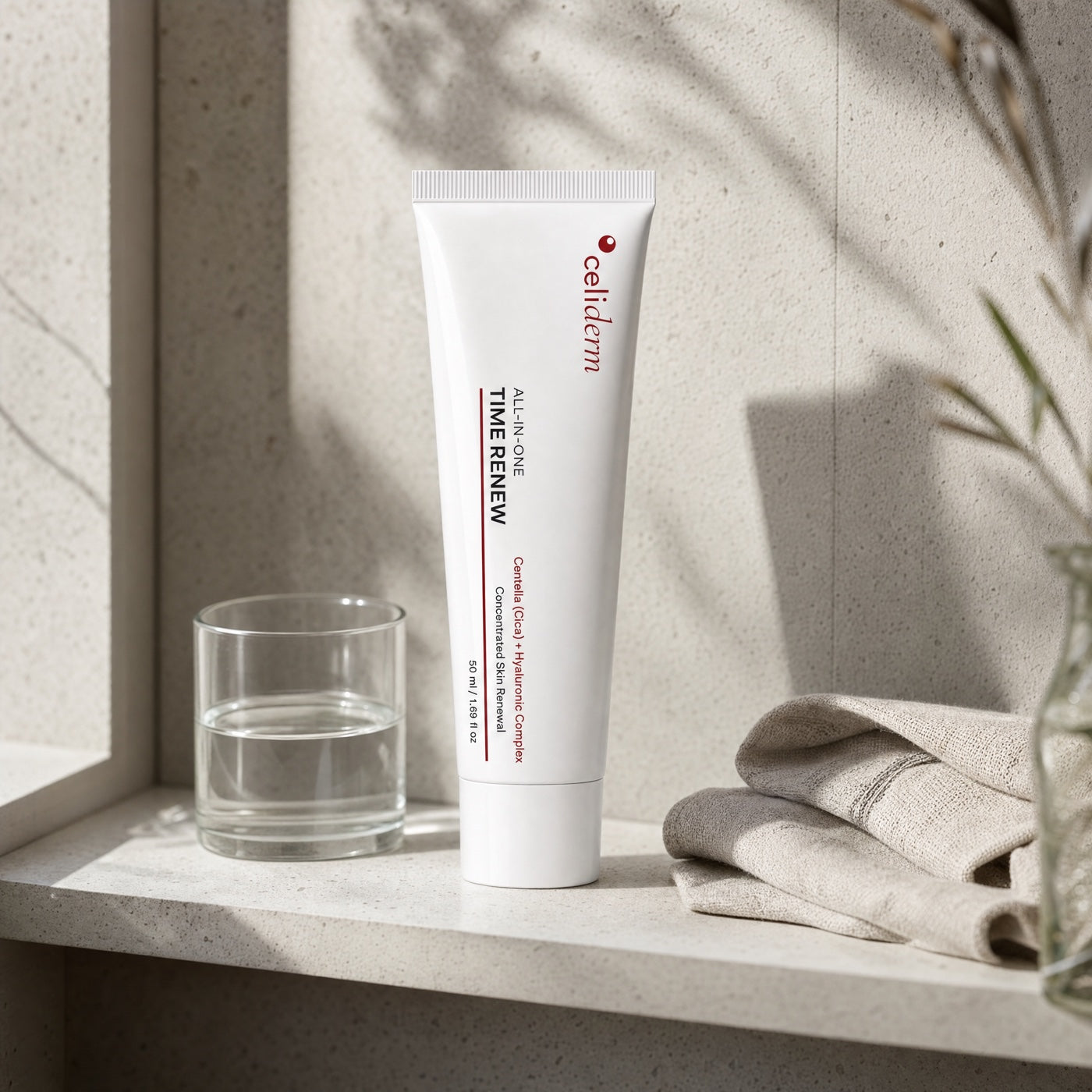
Korea solved this fifty years ago. The rest of us are still buying the wrong thing.
There is a moment, usually somewhere in the forties, when the mirror stops negotiating. It is rarely one dramatic change. It is a slow accumulation: tone that has gone flat, a jawline that has softened, a patch on the cheekbone that used to be a freckle.
The response in most markets is to buy something expensive for wrinkles. The response in South Korea, for half a century, has been something else entirely.
The problem is not that your skin is ageing. It is that nobody told you which part matters.
Ask ten women over forty what they want fixed and nine will say wrinkles. Ask a dermatologist what actually makes a face read as older and wrinkles come fourth, behind loss of elasticity, uneven pigment and surface texture.
That gap is expensive. It is why bathroom cabinets fill with products aimed at the one visible symptom while the three underlying ones go untreated, and why women in their fifties describe looking tired on days they slept perfectly well.
South Korea worked this out decades ago. The result is a category built around prevention and barrier health rather than line-filling - and one botanical, centella asiatica, sitting at the centre of almost all of it.
Four things the beauty aisle has told you that are wrong
Wrinkles are the main sign of ageing.
Elastic recoil is. Skin that no longer springs back reads as older than skin with lines, which is why a rested face can still look tired.
Expensive means effective.
Price tracks packaging and marketing, not concentration. Korea regulates cosmetics as a functional category, so actives must be declared at stated doses rather than hidden in a blend.
More steps means better results.
Layering matters, but nine products of unknown strength is worse than one with declared actives. The routine only works if the doses do.
Anti-ageing starts when you see damage.
Korean routines start in the twenties as maintenance. Pigment and elasticity loss accumulate for years before they surface, which is why late intervention is slower.
An eight-week diary
We asked panel members to photograph themselves in the same bathroom, same light, same angle, morning only, no makeup. This is one participant, 52, using Time Renew twice daily and changing nothing else.
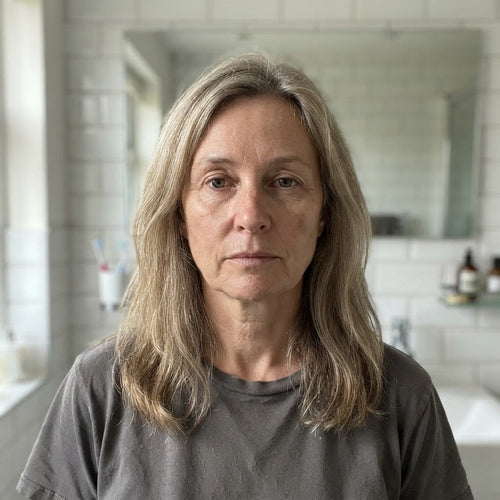
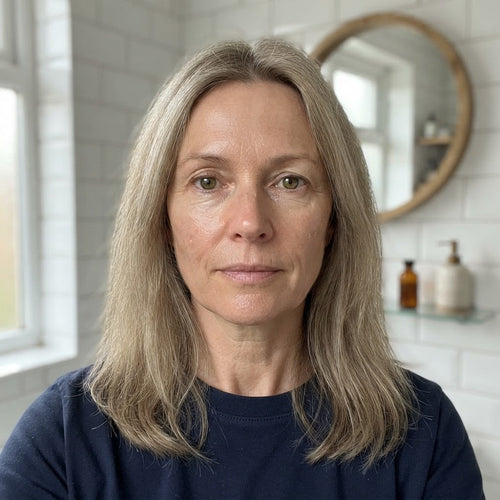
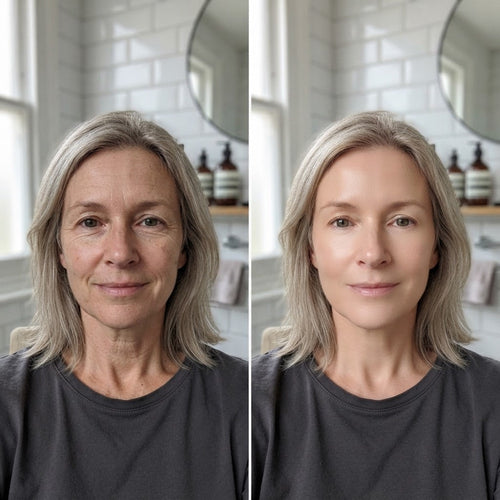
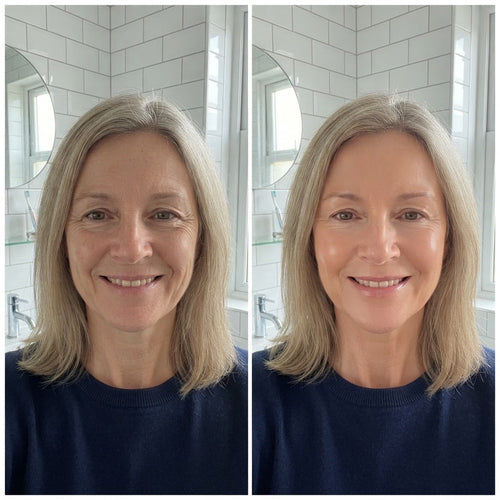
Week four was when it clicked. I had almost stopped at three because nothing was happening, and then my daughter asked what I had changed.Panel participant, 52
Why Korea, and why this ingredient
Centella asiatica entered Korean clinical practice in the 1940s for wound repair, long before anyone thought to put it in a moisturiser. Fifty years of use across the most demanding skincare market on earth is a longer real-world dataset than any single trial can produce.
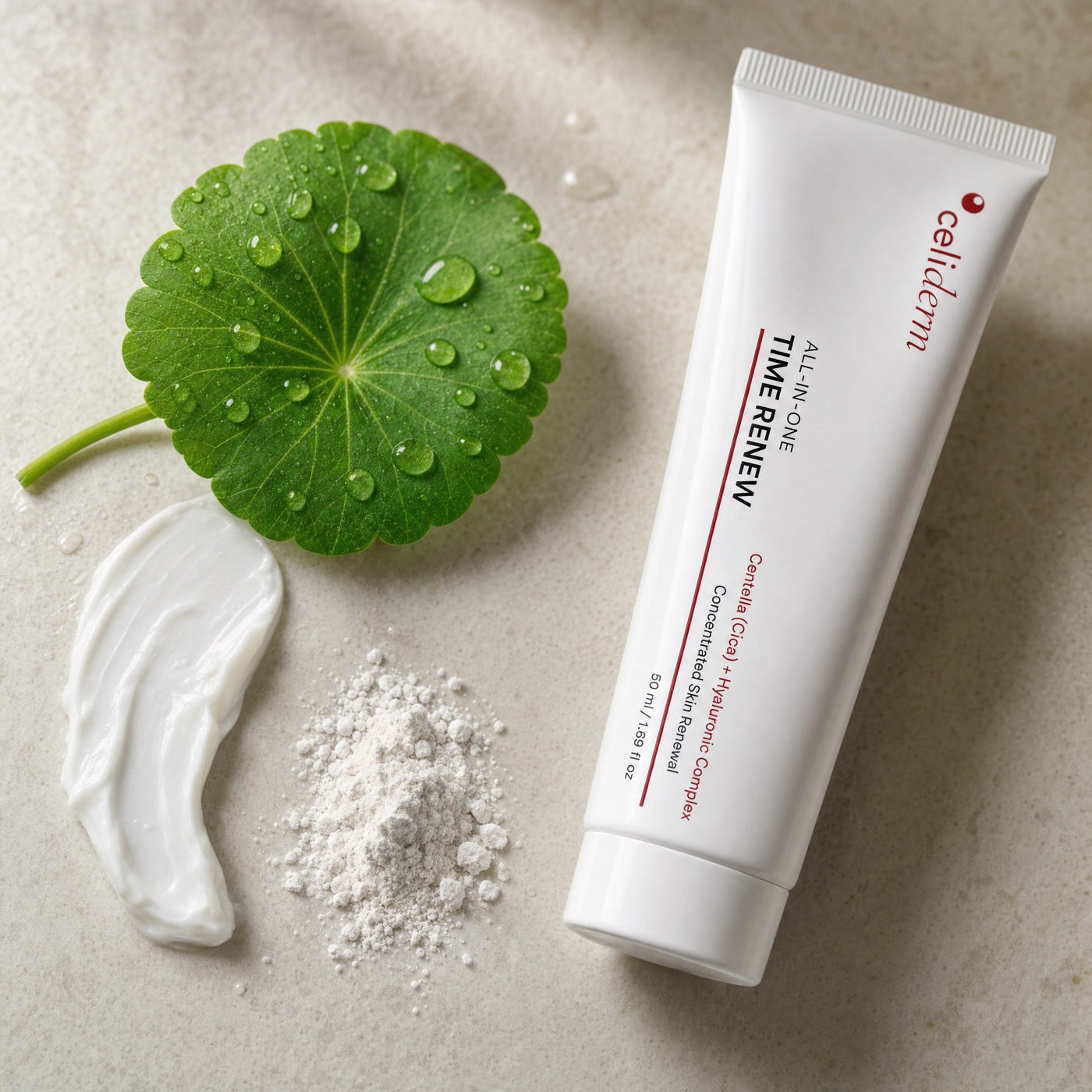
Korean consumers abandon a formula the moment it underperforms. Anything that survives that scrutiny for half a century has earned it. Time Renew is formulated and filled in South Korea to that standard, in limited batches to protect the concentrations.
What is in it, and how much
Every active declared at its concentration. No proprietary blends, no percentages withheld.
What you are actually choosing between
The honest comparison, including the parts that do not flatter us.
| Compared on | Celiderm Time Renew | £300 luxury cream | Clinic injectables |
|---|---|---|---|
| Cost per month | About $20 | $100 or more | $150-$250 amortised |
| Actives declared | Every one, with doses | Rarely | Not applicable |
| Works on pigment | Yes | Sometimes | No |
| Works on elasticity | Yes, gradually | Sometimes | No |
| Works on deep static lines | Softens only | Softens only | Yes, directly |
| Time to visible change | 4-8 weeks | 4-12 weeks | Days |
| Requires appointments | No | No | Yes, every 3-4 months |
Who this is not for
If your priority is erasing a deep static line between the brows in a fortnight, a cream is the wrong tool and any brand telling you otherwise is selling rather than advising. Injectables do that job.
Time Renew is for the slower, broader problem: tone, texture, elasticity and barrier health across the face, neck and chest, treated daily over months. Most panel members saw nothing meaningful before week three. If you will not give it eight weeks, do not buy it.
I have sensitive skin and expected the retinoid to be the end of it. Not one flare-up in three months, and my tone has evened out for the first time since my thirties.Panel participant, 47
Buy 1 Get 1 Free
Figures quoted are drawn from an internal twelve-week consumer perception panel of 214 participants and from individual testimonials, not from independent clinical trials. Diary photographs are of a single participant and are illustrative rather than typical. Individual results vary. These statements have not been evaluated by any medicines regulator. This product is a cosmetic intended for topical use and is not intended to diagnose, treat, cure or prevent any disease. Patch test before first use. Consult a dermatologist if you have a diagnosed skin condition, are pregnant or are breastfeeding.