
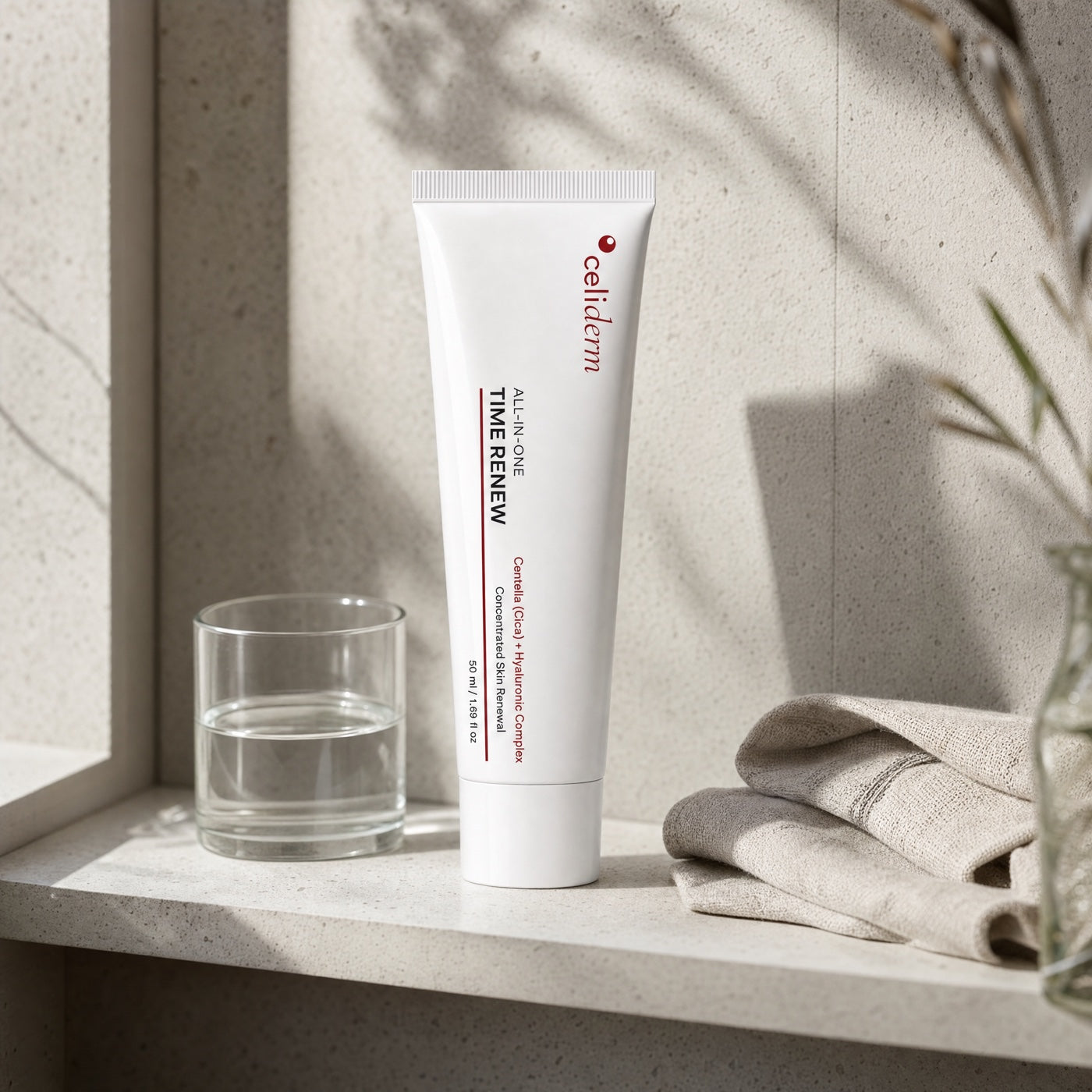
Why does a Korean pharmacy cream publish its ingredient doses when a $300 British one will not?
There is a number missing from almost every anti-ageing cream sold in Britain, and once you notice it is missing you cannot stop noticing.
It is not a conspiracy. It is a regulatory quirk - one that South Korea closed decades ago, and one that explains why the formulas coming out of Seoul read less like beauty products and more like prescriptions.
Part One: The question nobody in the beauty aisle wants asked
Stand in front of the anti-ageing shelf and count how many products tell you the concentration of their active ingredient. In a typical British chemist, the answer is close to none.
You will find "peptide complex" and "advanced formula" and "clinically proven", and you will find prices from nine pounds to three hundred. What you will not find is a number telling you how much of the working ingredient you are actually buying. A cream can legally contain a trace of an active - enough to name it on the front - and say nothing more.
This is not a scandal. It is simply how cosmetics are regulated in most of the West: as cosmetics, where marketing claims are policed but doses are not disclosed.
South Korea took a different route, and it is the reason the products coming out of Seoul look so strange to a Western eye.

Part Two: Why Korea regulates skincare like medicine
In South Korea, a category exists that has no direct British equivalent: functional cosmetics. Products claiming to affect wrinkles, pigmentation or elasticity must register their actives and declare concentrations. Claims are tied to doses, and doses are on the label.
The commercial consequence is straightforward. When every competitor must publish its numbers, under-dosing becomes visible, and formulators compete on concentration rather than on packaging.
Layer onto that a consumer base that starts prevention in their twenties, runs multi-step routines nightly, and abandons a brand the moment it underperforms - and you have the most demanding testing environment in the world.
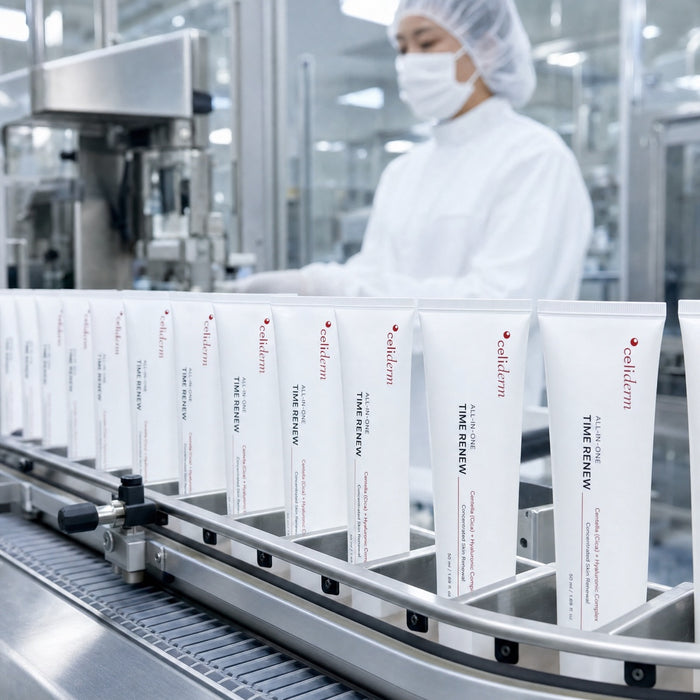
Where it is made

Part Three: The ingredient that has outlasted every trend
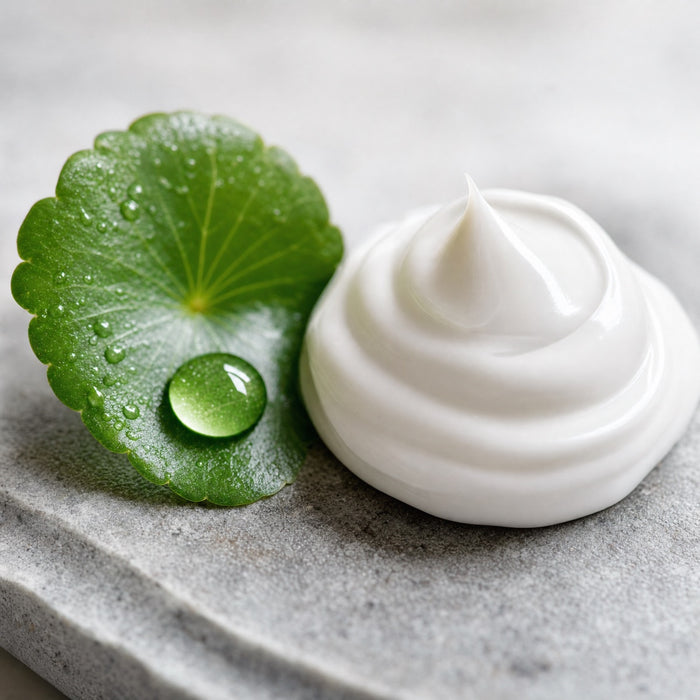
Centella asiatica is not new and was never fashionable. It entered Korean clinical practice in the 1940s as a wound-healing agent, prescribed for burns and surgical recovery long before it appeared in a moisturiser.
Its mechanism is unglamorous: it supports the skin's own barrier repair and calms the low-grade inflammation that drives pigment production and collagen breakdown. It does not force turnover the way an acid does. It does not thin the skin the way an aggressive retinoid can.
What it does is remove the obstacle. A barrier that holds water repairs itself. A barrier that is inflamed cannot.
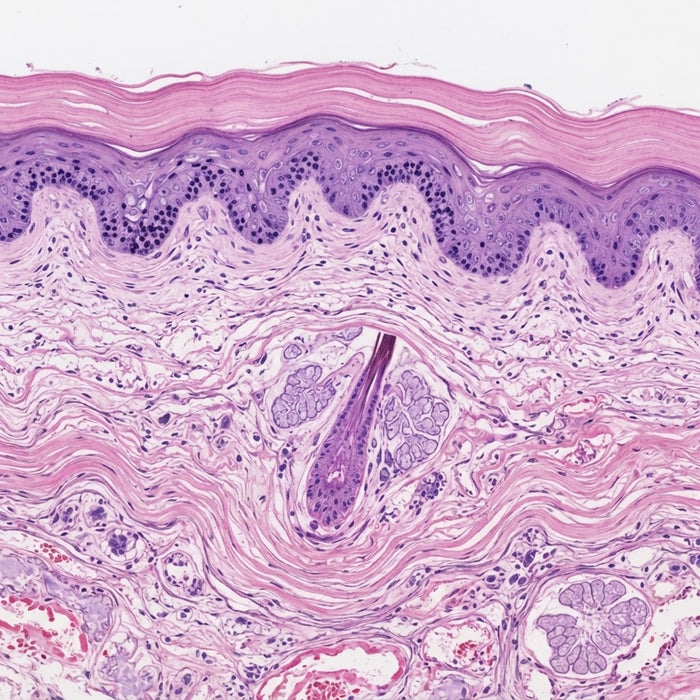
How the formula actually works, in four stages
Nothing happened for three weeks and I nearly stopped. Week four was when my daughter asked what I had changed.Panel participant, 52
Part Four: Eight weeks, photographed
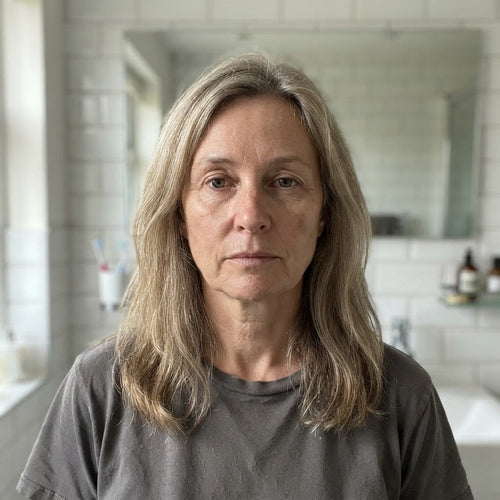
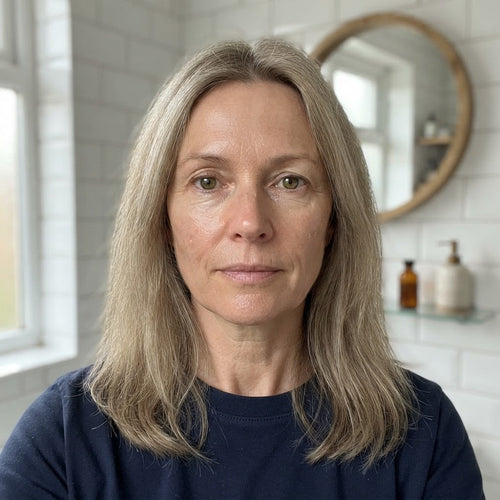
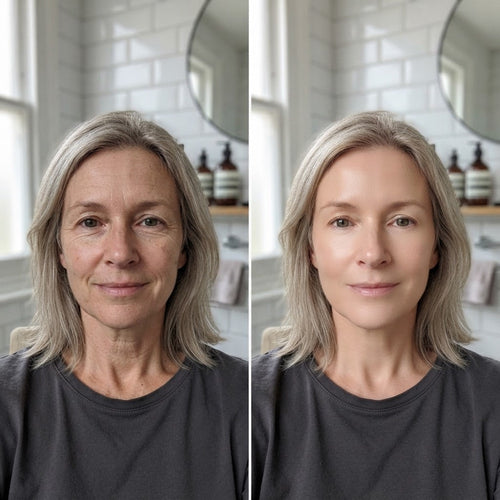
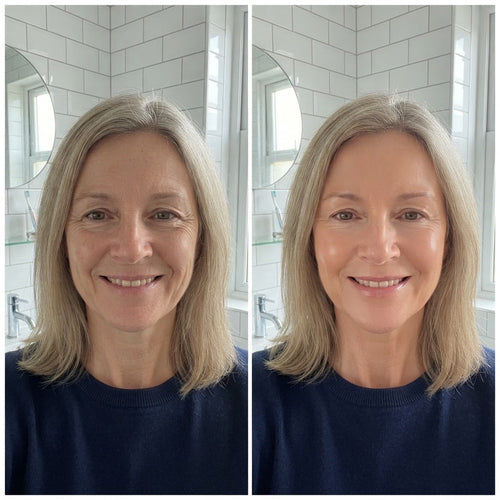
Panel members photographed themselves in the same bathroom, same light, same angle, mornings only, no makeup. This is one participant, aged 52, using Time Renew twice daily and changing nothing else in her routine.
Part Five: Every active, with its dose
Published concentrations, as required of functional cosmetics in South Korea. Compare this against the label of whatever you are using now.
Part Six: Four things you have been told that do not hold up
Wrinkles are the main sign of ageing.
Elastic recoil is. Skin that no longer springs back reads as older than skin with lines, which is why a well-rested face can still look tired.
A higher price means a stronger formula.
Price tracks packaging and marketing. Without a published concentration, price tells you nothing about dose.
Results should appear within a fortnight.
Barrier comfort improves in days. Elasticity and pigment change over four to twelve weeks, because that is how long skin renewal takes.
Sensitive skin cannot tolerate actives.
It cannot tolerate aggressive acids and high-strength retinoids. Centella is the opposite: it is prescribed to calm compromised skin.
Part Seven: The honest comparison
Including the parts that do not favour us.
| Compared on | Celiderm Time Renew | $300 luxury cream | Clinic injectables |
|---|---|---|---|
| Cost per month | About $20 | $100 or more | $150-$250 amortised |
| Actives published with doses | Yes, all of them | Rarely | Not applicable |
| Works on pigment | Yes | Sometimes | No |
| Works on elasticity | Yes, gradually | Sometimes | No |
| Works on deep static lines | Softens only | Softens only | Yes, directly |
| Suitable for sensitive skin | Yes | Varies | Varies |
| Time to visible change | 4-8 weeks | 4-12 weeks | Days |
| Requires appointments | No | No | Every 3-4 months |
Part Eight: Who should not buy this
If your priority is erasing a deep static line between the brows within a fortnight, a cream is the wrong instrument and any brand claiming otherwise is selling rather than advising. Injectables do that job, and they do it well.
If you will not commit eight weeks, do not buy it. Most panel members saw nothing meaningful before week three. The formula works with the skin's renewal cycle, and that cycle does not negotiate.
And if you are currently using a prescription retinoid under dermatological supervision, speak to your doctor before adding anything.
I have sensitive skin and expected to react. Three months in, not one flare-up, and my tone has evened out for the first time since my thirties.Panel participant, 47
Part Nine: The questions we are asked most
How long until I see something?
Comfort and hydration improve within the first week. Texture and tone typically shift between weeks three and five. Elasticity and pigment changes are slowest, usually four to twelve weeks.
Can I use it with a retinoid?
Yes for over-the-counter retinol, applied on alternate nights initially. If you use a prescription retinoid, check with your dermatologist first.
Will it work on my neck and chest?
Yes, and it should be used there. Neck skin is thinner and usually the most neglected. Sweep upward from the collarbone to the jaw.
Is it suitable for sensitive skin?
Centella is prescribed specifically to calm compromised skin. The formula is fragrance-free. Patch test first, as with anything new.
How long does one jar last?
Around three months of twice-daily use on face, neck and chest.
What if it does not work for me?
Return it within 90 days for a full refund, opened jars included. We would rather refund you than have you persist with something that is not working.
Why is it not sold in shops?
Limited production runs protect the concentrations. Selling direct also means we are not paying for retail margin out of the formulation budget.
Buy 1 Get 1 Free
Figures quoted are drawn from an internal twelve-week consumer perception panel of 214 participants and from individual testimonials, not from independent peer-reviewed clinical trials. Diary photographs show a single participant and are illustrative rather than typical. Individual results vary. These statements have not been evaluated by any medicines regulator. This product is a cosmetic intended for topical use and is not intended to diagnose, treat, cure or prevent any disease. Patch test before first use. Consult a dermatologist if you have a diagnosed skin condition, take prescription topical medication, are pregnant or are breastfeeding.